
Baby chicks need a reliable heat source for their first weeks. The two main options are infrared heat lamps and radiant heating plates. Both can work, but they differ a lot in safety, cost, and how chicks behave.
Backyard poultry can carry Salmonella even when they look healthy. The CDC recommends washing your hands after handling birds, eggs, or anything in their area. Check local rules before you get chickens.
Heat lamps
A heat lamp is a reflector clamp lamp with a 250-watt (or lower) infrared bulb, hung above the brooder.
Pros: - Inexpensive to buy. - Warms a large area. - Easy to find at farm stores.
Cons: - Fire risk. Heat lamps have caused many coop, barn, and garage fires. Lamps can fall into bedding, bulbs can shatter, and dust can ignite. - High energy use. A 250-watt bulb runs around the clock for weeks. - Constant light can disrupt chick sleep patterns. - Uneven heat that can overheat chicks if hung too low.
If you use a heat lamp, secure it with a chain or wire, not just the clamp, use a bulb guard, keep it away from bedding and walls, and check it often. Many extension services and fire officials urge extra caution.
Heating plates
A heating plate, sometimes called a radiant brooder, is a flat heated panel on adjustable legs. Chicks go underneath to warm up, like going under a hen.
Pros: - Much lower fire risk. The plate stays at moderate temperatures. - Low energy use. Many use about 20 to 40 watts. - Natural day and night cycles, since there is no bright light. - Natural behavior. Chicks come out to eat, drink, and explore, then go back to warm up.
Cons: - Higher upfront cost. - Must be adjusted as chicks grow. - Chicks may roost on top and soil it unless you add a cover or cone. - In very cold spaces, plates alone may not be enough.
Setting up a heating plate
- Set the plate height so chicks can stand comfortably underneath and their backs lightly touch the plate.
- Angle it slightly so smaller and bigger chicks both fit.
- Raise it as chicks grow.
- Place food and water a short distance away.
- Use an anti-roost cone or cover to keep the top clean.
- Show chicks the plate when they arrive by gently placing them underneath.
Brooder temperature
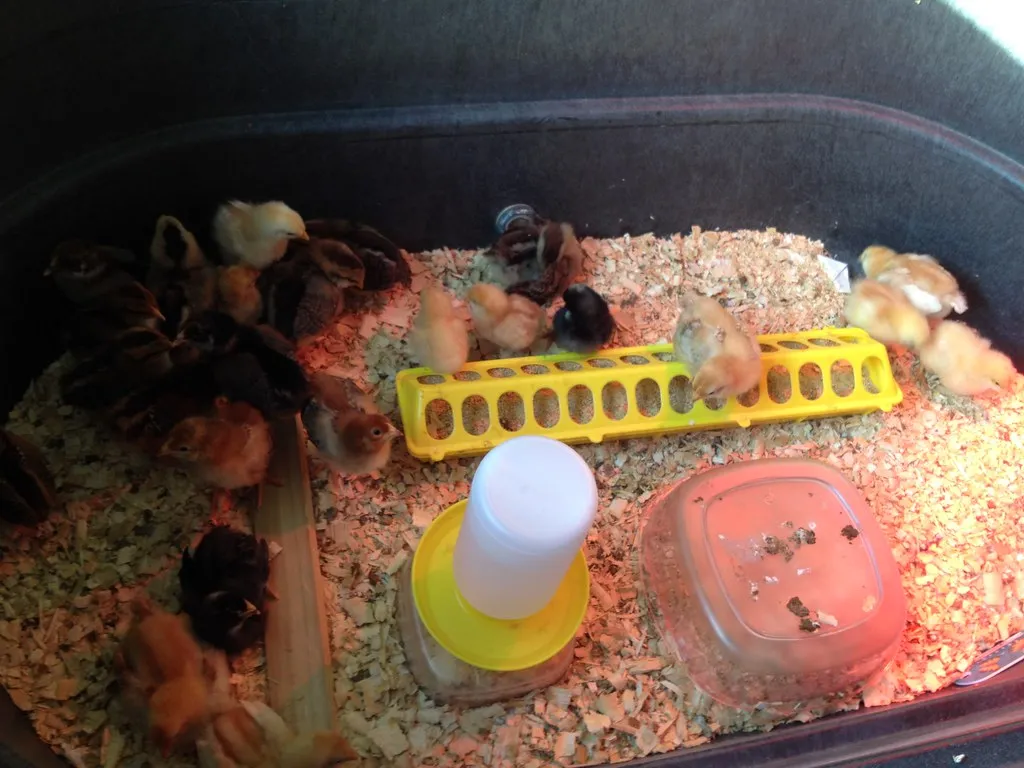
With a heat lamp, aim for about 95°F at chick level the first week, dropping about 5°F per week. With a plate, follow the maker’s guidance; the warmth is directly under the plate, and the rest of the brooder can be cooler. Watch chick behavior: huddling means too cold, panting and spreading out means too hot.
Energy cost
A 250-watt lamp running for six weeks uses far more electricity than a 22-watt plate. The plate often pays for itself in energy savings over one or two batches.
Which should you choose?
For most backyard keepers, a heating plate is the safer and more natural option, especially in a garage, shed, or home. If you use a heat lamp, take every fire precaution and never leave it unsecured.
For more on the first weeks, see raising baby chicks.