
Raising chicks is one of the joys of keeping chickens. Fluffy chicks grow fast and need careful care for their first several weeks. Here is how to give them a strong start.
Backyard poultry can carry Salmonella even when they look healthy. The CDC recommends washing your hands after handling birds, eggs, or anything in their area. Check local rules before you get chickens.
Set up the brooder before chicks arrive
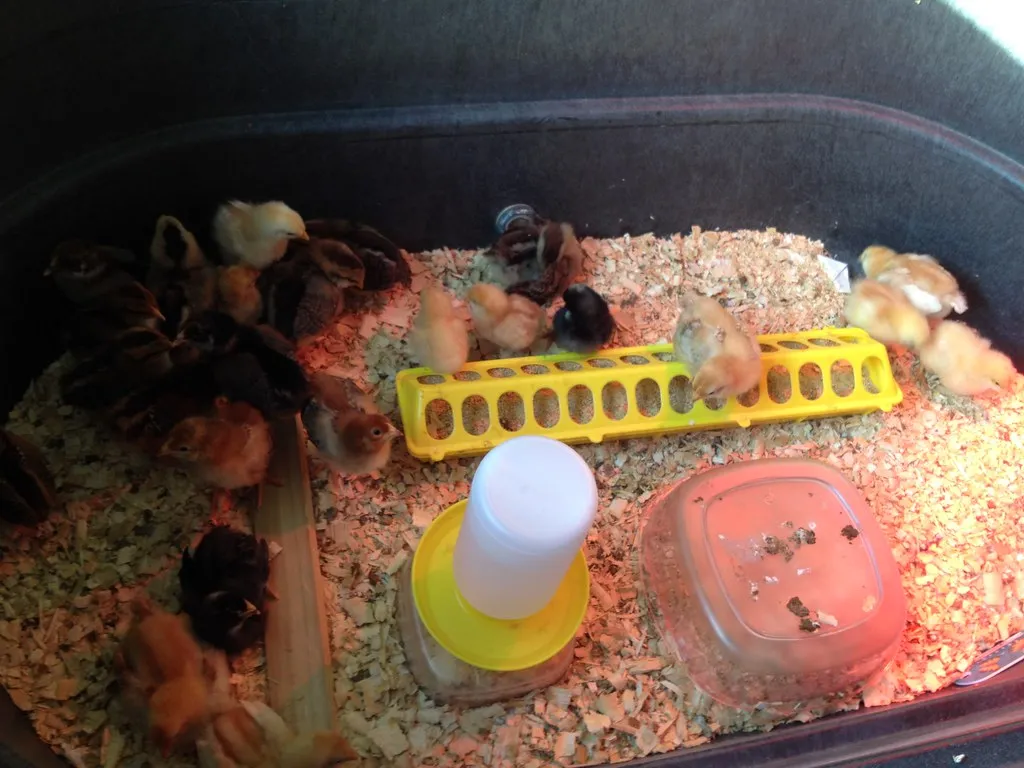
A brooder is a warm, safe enclosure. It can be a large plastic tub, a stock tank, a cardboard box for the first days, or a purpose-built brooder.
You need: - A heat source: a heating plate or a heat lamp. - Bedding: pine shavings (not cedar), or paper towels for the first few days so chicks learn what food is. - A chick feeder and waterer. - A thermometer. - A cover to keep chicks in and pets out.
Turn on the heat a day ahead so the brooder is warm when chicks arrive.
Keep chicks warm
Chicks cannot regulate their body temperature at first. A common guideline is about 95°F at chick level the first week, dropping about 5°F each week until they are fully feathered, usually around 5 to 6 weeks. Watch their behavior:
- Huddled under the heat: too cold.
- Spread far from the heat and panting: too hot.
- Moving around, eating, and sleeping in small groups: just right.
Heating plates mimic a mother hen. Chicks go under to warm up and come out to eat and drink, and plates carry much lower fire risk than heat lamps. See brooder heat lamp vs heating plate.
Feed and water
- Chick starter feed: a complete feed made for chicks, often around 18 to 20 percent protein. Medicated or non-medicated depends on whether chicks were vaccinated for coccidiosis; ask your hatchery.
- Fresh water at all times. Dip each chick’s beak in water when they arrive to show them where it is.
- No layer feed for chicks; its high calcium can harm young birds.
- Grit if you give treats or anything other than chick feed.
Watch for common problems
- Pasty butt: droppings stuck to the vent. Gently clean with warm water. It can be fatal if ignored.
- Spraddle leg: legs splay out, often from slippery surfaces. Use textured bedding or paper towels.
- Lethargy or not eating: check temperature and water, and call a vet if it continues.
Handling and hygiene
Handle chicks gently and often to make them friendly. The CDC warns that chicks can carry Salmonella even when they look healthy. Wash hands with soap and water after handling chicks or anything in the brooder, supervise children, and do not snuggle or kiss chicks. Keep the brooder out of the kitchen.
Space as they grow
Chicks grow fast. Plan for about ½ square foot per chick at first, increasing to 2 or more square feet by 4 to 6 weeks. Add a low roost around 3 to 4 weeks.
Moving to the coop
Chicks can usually move outdoors when fully feathered, around 6 to 8 weeks, and when nighttime temperatures are mild or the coop is protected. Introduce them gradually if you have an existing flock, keeping them separated by a fence for a week or two.
Starting to lay
Most pullets begin laying around 18 to 24 weeks, depending on breed. Switch to layer feed when they start laying or around 18 weeks.
For egg hatching, see incubating eggs at home.