
Clean food and water are basic needs, but the right equipment makes a big difference in waste, mess, pests, and your daily chores. Here is how to choose and set up feeders and waterers.
Backyard poultry can carry Salmonella even when they look healthy. The CDC recommends washing your hands after handling birds, eggs, or anything in their area. Check local rules before you get chickens.
Feeder types
Hanging tube feeders. A tube with a pan at the bottom, hung at about the height of the birds’ backs. Simple and affordable.
Trough feeders. Long, open feeders. Common for chicks, but chickens scratch feed out of them.
Port feeders. Buckets or tubes with side ports that chickens reach into. They reduce spillage and keep feed dry.
Treadle feeders. A lid opens only when a chicken steps on a platform. They keep out rodents and wild birds, which can save a lot of feed.
Waterer types
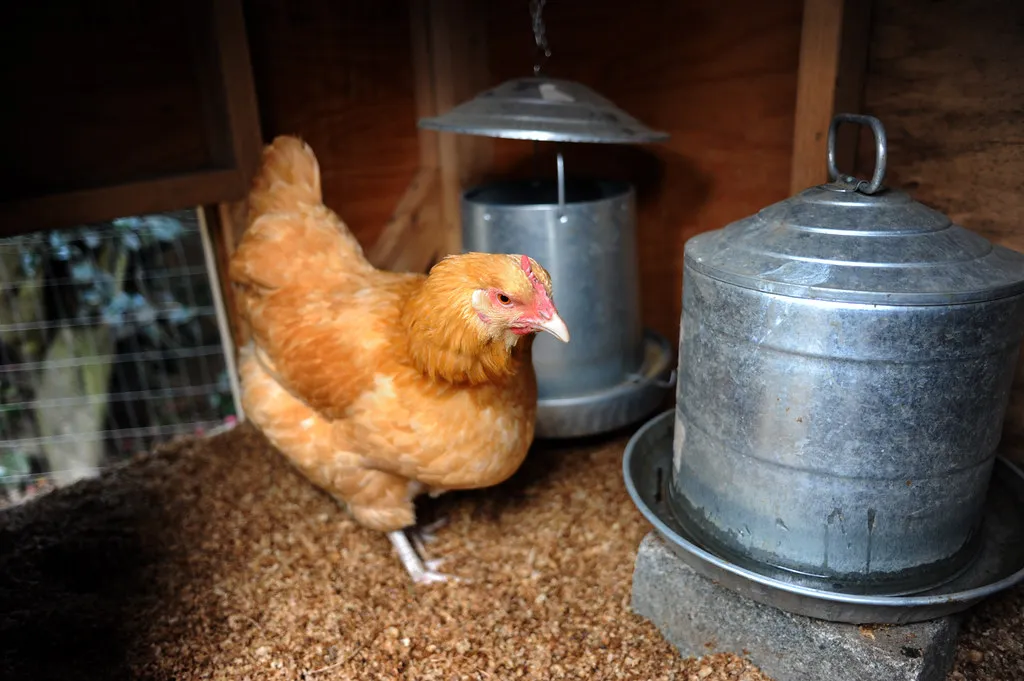
Gravity founts. The classic double-wall waterer. Easy to use but birds kick bedding into them.
Nipple waterers. Birds peck a metal nipple to release drops of water. Clean but some birds take time to learn.
Cup waterers. Small cups that refill automatically. Easy for birds to learn and keep water cleaner than open founts.
Bucket systems combine large capacity with nipples or cups, so you refill less often.
Setup tips
- Raise feeders and waterers to about the height of the birds’ backs. This reduces spillage and keeps out bedding.
- Provide enough access. Use multiple feeders or waterers for larger flocks so lower-ranked hens can eat.
- Keep feed dry. Wet feed molds, which can make chickens sick.
- Protect from wild birds and rodents. Store feed in metal bins with tight lids and remove spilled feed.
- Place waterers in shade in summer to keep water cool.
Cleaning
- Rinse and refill waterers daily or as needed.
- Scrub waterers weekly with hot, soapy water. Some keepers use a diluted bleach solution, rinsed well afterward.
- Clean feeders when you refill or if feed gets wet.
- Wash your hands after handling poultry equipment, and clean equipment outside, not in the kitchen sink, to reduce Salmonella risk, as the CDC recommends.
Winter water
Chickens need liquid water every day, even in freezing weather. Options include: - Heated bases that sit under metal founts. - Heated waterers with built-in heaters. - Heated bucket wraps for bucket systems. - Swapping waterers a few times a day if you have no power.
Use outdoor-rated cords and outlets, keep cords away from bedding, and check equipment for damage to reduce fire risk. See chickens in winter.
Summer water
In hot weather, chickens drink much more. Provide extra water stations in shade and check them often. Some keepers add frozen water bottles to waterers on very hot days.
How much do chickens eat and drink?
A standard laying hen eats roughly a quarter pound of feed a day, depending on size, breed, and season, and drinks more in hot weather. Keep feed available during daylight hours and water available at all times.
What goes in the feeder
Use a complete feed suited to your birds’ age. See what to feed chickens.