
Nearly every predator likes chicken. Raccoons, foxes, coyotes, hawks, owls, opossums, weasels, snakes, rats, and even neighborhood dogs can all threaten a flock. Most losses are preventable with the right construction and habits.
Backyard poultry can carry Salmonella even when they look healthy. The CDC recommends washing your hands after handling birds, eggs, or anything in their area. Check local rules before you get chickens.
Know your predators
- Raccoons: clever, strong, and able to open simple latches. Can reach through wide mesh.
- Foxes and coyotes: dig under fences and grab free-ranging birds.
- Hawks and owls: attack from above, often in open runs.
- Weasels and minks: can squeeze through openings around an inch wide.
- Snakes and rats: steal eggs and chicks.
- Dogs: often the biggest daytime threat in suburbs.
Use hardware cloth, not chicken wire
Chicken wire keeps chickens in but does not keep predators out. Raccoons can tear it and reach through. Use welded hardware cloth: - ½-inch mesh for runs and windows. - ¼-inch mesh where you need to block small predators and rodents.
Attach it with screws and washers, not just staples.
Secure every opening
- Cover windows and vents with hardware cloth.
- Close gaps around doors, roofs, and floors.
- Check for holes regularly.
Lock doors with predator-resistant latches
Raccoons can open hook-and-eye latches and simple slide bolts. Use two-step latches, carabiners on latches, or locks.
Close the coop every night
Most nighttime predators are stopped by a closed, secure coop. An automatic door closes it at dusk even if you are not home.
See automatic coop doors.
Stop diggers
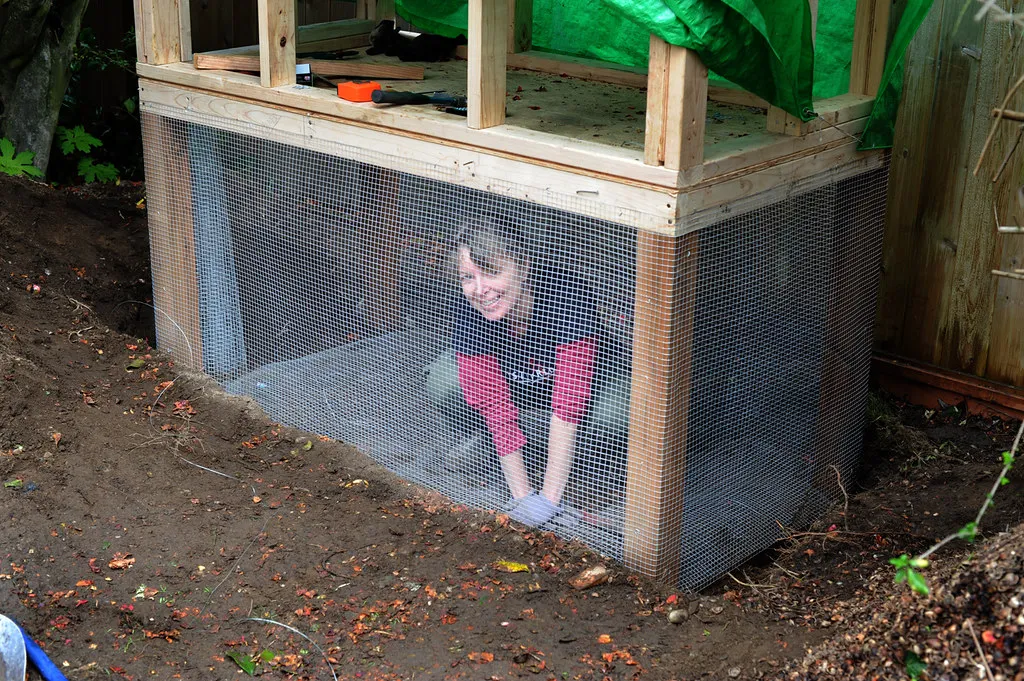
Predators dig under fences and walls. Options: - Apron: lay hardware cloth flat on the ground, extending 12 to 24 inches out from the run walls, and attach it to the base. Cover it with soil or mulch. - Bury the mesh: dig a trench and bury hardware cloth at least 12 inches deep. - Solid floor: some coops have wood or concrete floors.
Cover the run
A roof of hardware cloth, solid panels, or netting protects against hawks and owls and climbing predators.
Raise the coop
Raised coops discourage rodents and snakes from nesting underneath and keep the coop dry.
Remove attractants
- Store feed in metal bins with tight lids.
- Clean up spilled feed.
- Collect eggs daily.
- Remove dead birds promptly.
Supervise free-range time
Free-ranging birds are vulnerable during the day. Supervise, provide cover like shrubs, and bring them in before dusk.
Motion lights and deterrents
Motion-activated lights, electric poultry netting, and guardian animals can help, but are no substitute for a secure coop.
If you suffer a loss
Look for clues: tracks, feathers, holes, or a pattern of attack. Fix the weakness right away, because predators return. Contact your state wildlife agency for guidance on problem wildlife; many species are protected.
Daily habits
- Count birds at dusk.
- Close and lock the coop.
- Check for damage.
- Collect eggs.
A secure coop is the best investment you can make in your flock.